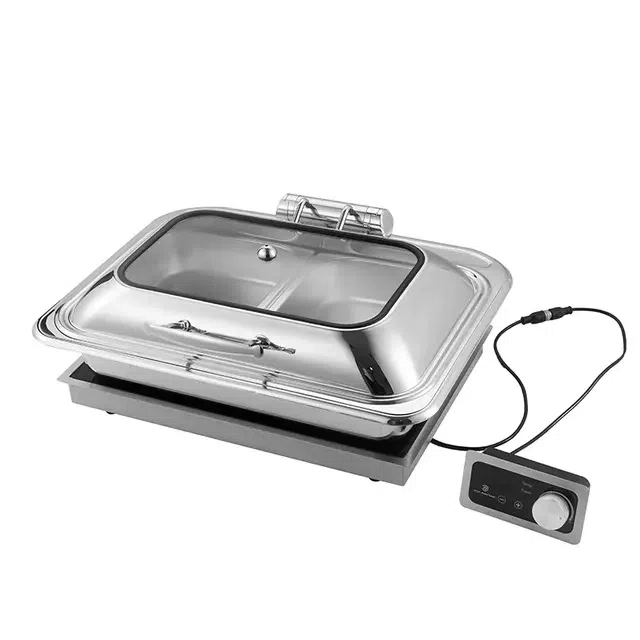
In recent years, the commercial induction deep fryer has become an essential piece of equipment in professional kitchens worldwide. As restaurants, hotels, and catering businesses seek higher efficiency, better food quality, and improved safety standards, induction frying technology is gaining strong momentum. Unlike traditional gas or electric fryers, induction deep fryers use electromagnetic heating to generate heat directly in the cookware, resulting in faster response times, precise temperature control, and significantly reduced energy loss. This innovation is reshaping how commercial kitchens operate and manage high-volume frying tasks.
One of the most significant advantages of a commercial induction deep fryer is its exceptional energy efficiency. Induction technology transfers heat directly to the pot, minimizing wasted heat and reducing overall power consumption. This allows kitchens to maintain stable frying temperatures even during peak service hours while lowering utility costs. Precise digital temperature control ensures consistent frying results, which is crucial for maintaining food quality and taste. From French fries and fried chicken to seafood and snacks, induction fryers help deliver uniform color, texture, and flavor with every batch.
Safety is another key factor driving the adoption of commercial induction deep fryers. Traditional gas fryers involve open flames, while conventional electric fryers generate residual heat that can increase kitchen temperatures and pose burn risks. Induction fryers remain relatively cool on the surface, reducing the likelihood of accidental burns. Many models are equipped with advanced safety features such as overheat protection, automatic shut-off, and fault detection systems. These features not only protect kitchen staff but also reduce the risk of fire hazards, making induction deep fryers especially suitable for enclosed or high-density kitchen environments.
Hygiene and ease of cleaning are critical in commercial food preparation, and the commercial induction deep fryer excels in this area. The smooth glass-ceramic surface resists oil buildup and food residue, allowing for quick and effortless cleaning after service. Since induction units do not rely on exposed heating elements, there is less carbon buildup and fewer hard-to-clean components. This contributes to a cleaner kitchen environment, helps operators meet strict hygiene standards, and reduces maintenance time. For busy commercial kitchens, easier cleaning translates directly into improved efficiency and lower labor costs.
The versatility of the commercial induction deep fryer makes it suitable for a wide range of foodservice operations. From quick-service restaurants and food courts to hotels and institutional kitchens, induction fryers adapt easily to different cooking demands. Many units are compact and modular, allowing flexible kitchen layouts and efficient use of space. Some models also support multi-zone temperature control, enabling chefs to fry different foods simultaneously without compromising quality. This flexibility helps kitchens respond quickly to changing menu requirements and customer demand.
Durability and long-term reliability are essential considerations for professional equipment, and modern commercial induction deep fryers are built to meet these expectations. High-quality stainless steel housings, robust electronic components, and reinforced control panels ensure stable performance under continuous operation. Reduced mechanical wear, due to the absence of traditional heating elements, also extends equipment lifespan. For business owners, this means lower maintenance costs, fewer breakdowns, and a better return on investment over time.
In conclusion, the commercial induction deep fryer represents a major advancement in professional kitchen technology. By combining energy efficiency, precise temperature control, enhanced safety, and easy maintenance, it addresses many of the challenges faced by modern foodservice operations. As sustainability, operational efficiency, and food quality continue to shape the future of the catering industry, commercial induction deep fryers are set to play a central role in upgrading kitchens and improving overall performance. Their adoption marks a clear shift toward smarter, safer, and more efficient cooking solutions in the global foodservice market.